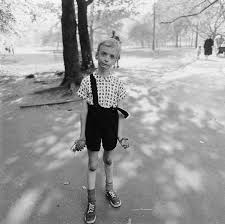
Child with Toy Hand Grenade in Central Park, New York City (1962)
Saturday, 2 November 2013
My inspirations
My inspiration which I will use in my project is a documentary photography. This kind of photos can by showing simple people pass on so many emotions and give different interpretations. One of the inspirational photographer for me is Diane Arbus. He was able to capture everything, her pictures my meaning full. They bring pain and force observer to think about this photo.
Tuesday, 15 October 2013
Brighton and a set of shots from restaurant.
In this task I had to took the pictures of people in the restaurant or shope while they are working. To my homework I have chosen the restaurant on the Western Road in Brighton. It is a italian restaurant which is making fresh and good quality dishes. I have just taking pictures of people and food. It was a good practise for me. I was taking pictures inside and I had to use different kind of exposure to take photo of a person or a food and the general view of the restaurant.
Photographs which I took: Photograph of man who is working in the restaurant:
The weather was sunny so the pictured show reataurant in the sun.
Photographs which I took: Photograph of man who is working in the restaurant:
A wider shot of this man showing he while he is working:
The pictures are not in good quality. They are too blury. But that was for me first time when I was doing this kind of photos. After that I have learned a lot of things. My experience I am going to use in my project.
Next I made a photo of a girl which was also working there.
A shot of a girl who is making a coffee:
Next aspect of my task was to photograph customers. Here is a wide shot showing the part of restaurant with customers inside.
A shot of people working in the restaurant interacting with customer:
After this I started to take pictures of food. It was looking so tasty and taking picture of that was a pleasure.
A contextual shot without them but showing food:
The last type of photographs which I should take was a close-up. As a object for that I used hands of a person who was preaparing a dish.
A close - up:
The last photographs of mine were outside the restaurant. They show that it is small place where people can come and enjoy their time with the tasty food.
Outside the restaurant:The weather was sunny so the pictured show reataurant in the sun.
Monday, 14 October 2013
"Photography" John Ingledew
"Photographs are seductive, they feed our imaginations."
"The camera is omnipresent."
In this book we can find the answers to basic questions about photography and find the description of photography's history. One of the topics in this book are about difference between a camera that uses film and a digital camera. The book can be also seen as an inspirational because it can be taken as a original guide. The author explaines technique in a clear and simple way. He presents the spectrum of photography from traditional to digital. In the book I was also able to read about the young pohotographers works. John Ingledew shown in their works fresh, dynamic images.
Roland Barthes “Camera Lucida”
Roland Barthes was a French literary
theorist, philosopher, linguist, critic, and semiotician. He is an author of
the book titled "Camera Lucida". The book is a collection of Barthes
ideas and thoughts about photography. He claimed that to describe a photography
we have to think about punctum and studium. Puctum is a "detail" a
partial object, it presents the viewers emotions towards this photography.
While studium is more clear. Studium is everything we can see on the picture.
Quotes:
“The photograph mechanically repeats what could never be repeated existentially.”
“Photograph is never anything but an antiphon of “Look”.”
“A photograph is always invisible: it is not it that we see.”
“The operator is the photographer. The spectator is ourselves, all of us who glance through collections of photographs – in magazines and newspapers, in books, albums, archives.”
“I feel myself observed by the lens, everything changes: I constitute myself in the process of ‘posing’, I instantaneously make another body for myself, I transform myself in advance into an image.”
“I feel that photograph creates my body or mortifies it, according to its caprice.”
“Photography transformed subject into object and even, one might say, into a museum object”
“The photograph mechanically repeats what could never be repeated existentially.”
“Photograph is never anything but an antiphon of “Look”.”
“A photograph is always invisible: it is not it that we see.”
“The operator is the photographer. The spectator is ourselves, all of us who glance through collections of photographs – in magazines and newspapers, in books, albums, archives.”
“I feel myself observed by the lens, everything changes: I constitute myself in the process of ‘posing’, I instantaneously make another body for myself, I transform myself in advance into an image.”
“I feel that photograph creates my body or mortifies it, according to its caprice.”
“Photography transformed subject into object and even, one might say, into a museum object”
Tuesday, 8 October 2013
Working with Nikon D 7000
Death of field refers to the range of distance that appears acceptably sharp. It varies depending on camera type, aperture and focusing distance, although print size and viewing distance can also influence our perception of death of field.
To took my photographs I have used Nikon D 7000. When I was taking photos to present the depth of filed immediately in front of or in back of the focusing distance begins to lose sharpness.
The depth of field we can divide into low depth of field (shallow depth of field) and hight depth of field (deep depth of field).
Low depth of field - to create this kind of effect I required a wide aperture like f/ 2.8 or wider.
Slow shutter speed it means that more light come into the camera. It means that anything that moves in the scene will blur.
To took my photographs I have used Nikon D 7000. When I was taking photos to present the depth of filed immediately in front of or in back of the focusing distance begins to lose sharpness.
The depth of field we can divide into low depth of field (shallow depth of field) and hight depth of field (deep depth of field).
Low depth of field - to create this kind of effect I required a wide aperture like f/ 2.8 or wider.
On the first photography I had bigger aperture while the sky is more dark than on the second one.
This photograph shows that when I was focusing on the front thing the background lose sharpness.
The same situation occurs in this photography as in the previous one. However, this time the final effect is sufficient for me.
High depth of field - to achieve the effect of deep depth of field I needed an aperture setting of f/ 16 or smaller.
The final effect of hight depth is in my opinion perfect, because it is not too dark or there is not too much light.
Slow shutter speed it means that more light come into the camera. It means that anything that moves in the scene will blur.
slow shutter speed with hight f-number
The slow shutter speed blurs the jets of water in the fountation
Fast shutter speed it means that less light come into camera so that freeze movement.
fast shutter speed with low f-number
The fast shutter speed appears to stop the water in its tracks
How do we read a photography?
The Photograph - Graham Clarke - Chapter 2
"A photography is a series of complex readings which relate as much to the expectations and assumptions that we bring to the image as to the photographic subject itself."
This is a quote from the Graham Clarke book. He pointed out that photograph is not only what we can see but also it brings a lot of more interpretations. We as a person looking at the photographs should read this as a text.
We can divide interpretation of photography into punctum and studium. Punctum presents emotions, it is something which hold the reader. When we are looking at photograph we have to answer the questions like what is happening? or how this imagine works?.
Matthew Brady "Standing by tree" 1865
"A photography is a series of complex readings which relate as much to the expectations and assumptions that we bring to the image as to the photographic subject itself."
This is a quote from the Graham Clarke book. He pointed out that photograph is not only what we can see but also it brings a lot of more interpretations. We as a person looking at the photographs should read this as a text.
We can divide interpretation of photography into punctum and studium. Punctum presents emotions, it is something which hold the reader. When we are looking at photograph we have to answer the questions like what is happening? or how this imagine works?.
Matthew Brady "Standing by tree" 1865
The photograph was created in 1865 during the American Civil War. Civil War fought from 1861 to 1865. The main issue of the war was slavery. President Abraham Lincoln was opposite slavery. M. Brady supported President Lincoln and wanted to show how Mathew Brady is best know of his portraits and documentation of American Civil War. He is called the father of photography.
The photography can be call the self portrait because on the right side we can see M. Brady. At the same time Brady made an attension of him. However the most important person is General Potter who is not wearing the hut. The picture was taken somewhere in the woods. It could be an army base they are discussing the strategy against the enemy. It is more like a painting than photograph, because every person is posing.
Tuesday, 1 October 2013
My inspirations - things which surrounding me
For me photography is really difficult to define. It is an art but also a tool to stop the time. Thanks to creation of phones with the cameras now everyone is able to take a photo. Thanks to photography we can perpetuate every minute from our life. It is really useful and helpful. However sometimes people took photos of things which should be forgotten. Photography could also be interpreted in wrong way.
That's why as Roland Barthes said: "Despise its passive way, photography is never neutral" Photos always bring some information and emotions.
Nowadays we are surrounded by photographs therefore this have a great impact on me.
This contemporary photo in some way is similar to "Identical Twins" by Diana Arbus from 1967
This shows that contemporary artists take an inspirations from 20th century photos.
Other photos are from adverbs which can found everywhere.
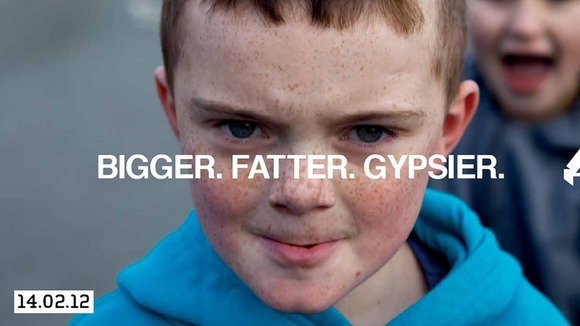
The pictures are everywhere around us. Therefore, I think that I like simple photographs which shows people especially by using close-up. The saturated photos with bold colours are interesting and catchy for viewer. In my own work I would like also to take picture of people by using close -ups. The photo from the advert below is for me interesting. This picture takes my attention and I am thinking about this boy, his face expression and the role it isplaying.
Subscribe to:
Posts (Atom)